Showing posts with label cheetahs. Show all posts

Sunday, 27 April 2014

The Placement Post

So last week I received the news that finally put my placement year pieces together... and its a big'un. After applying and undergoing a very quick selection process, I have been accepted to be part of a research team on a primate and predator project in South Africa!!

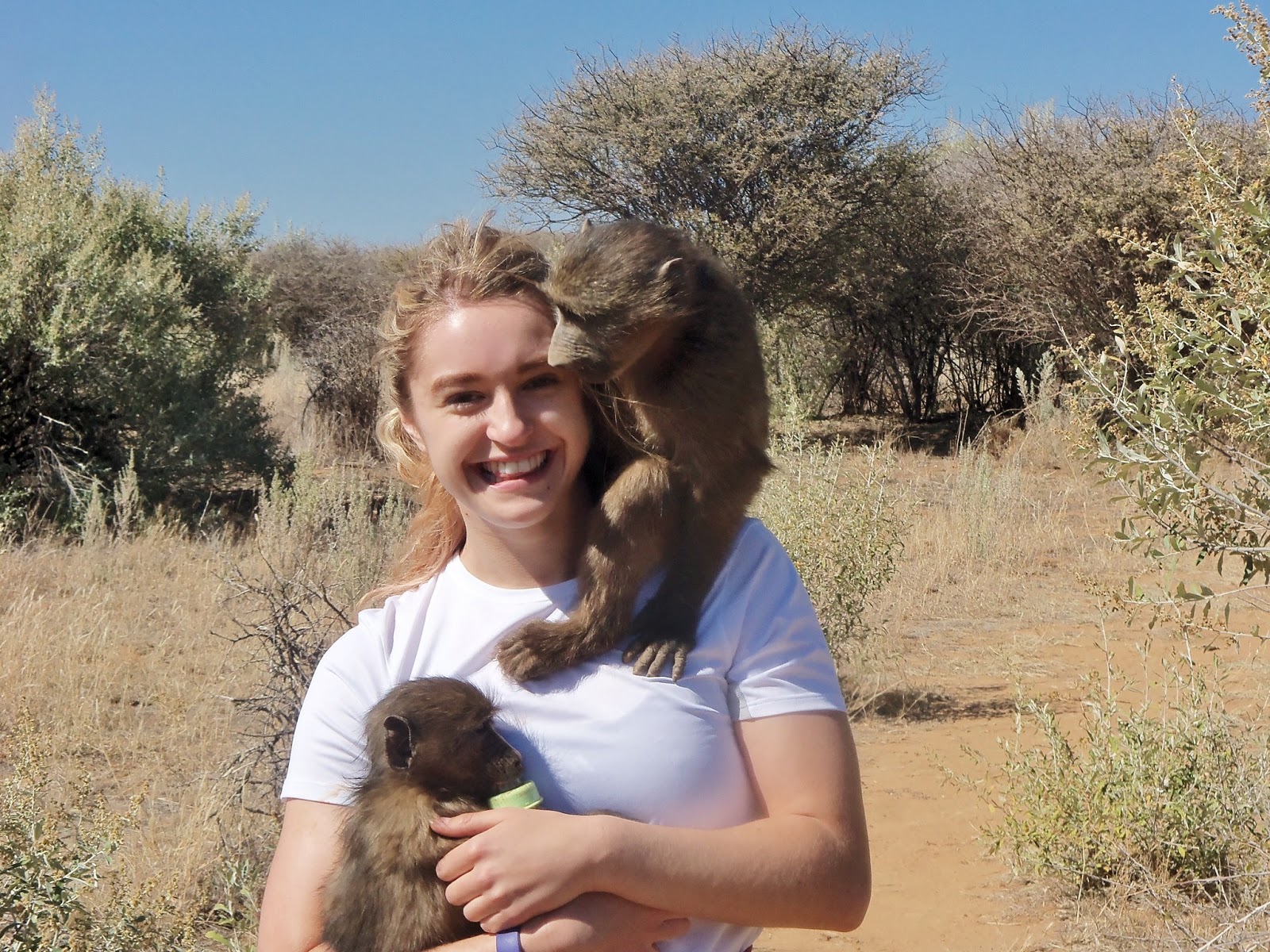
I will be working mostly with the monkeys. This seems crazy as I am a big cat person, but, monkeys are fascinating and ever since I cuddled baby baboons in Namibia last year, they definitely have a bit of my heart. On the project I will be tracking and recording data for Chacma Baboons, Vervet Monkeys, Samango Monkeys , Thick-tailed Bushbabies and Southern Lesser Bushbabies along with understanding how predation by Leopards and Hyenas affect the populations.

The idea of spending 3 months in the African Mountains is a little daunting, to say the least, but it's going to be an amazing adventure. On the plus side once I return at Christmas I will have a nice tan. 

Now that I have found all my placements I decided that it maybe nice to share what I have learnt with you all. This doesn't only apply to people who are in biological sciences, everyone should be able to find some useful information; whether that it is what I have learnt from the whole experience or using some of the websites I found useful to aid you in finding work abroad!


So lets begin...
1. When companies and charities come into your university, ATTEND! This is how I first heard about the Chester Zoo programme. Going and speaking to the people who are part of the application process doesn't just help you understand the role that you are applying for but it also means you can mention who you met if you get called for interviews.

2. If you meet someone remember who they are!! I have had problems when trying to remember who I have met and what their role is. Take a notepad with you, even if it is just to write down there name and role in the business.

3. Get connected. Everyone always makes out that this is a hard thing to do and it certainly may seem daunting but it  isn't difficult. Without realising it you are connected to all of your parents' friends and their friends families, your friends and the people they know, as well as all the staff in your university. The majority of the connections may be useless BUT there will be some good ones in there! When I was interviewed for Trentham Monkey Forest, although I didn't gain the job, I would never had known about it if I hadn't spoken to my old year 11 head of year, whose son was the manager there. It is incredible who you can find by just asking your older friends and family questions. Likelihood is, even if you don't have something come of it straight away, you may do in the future.

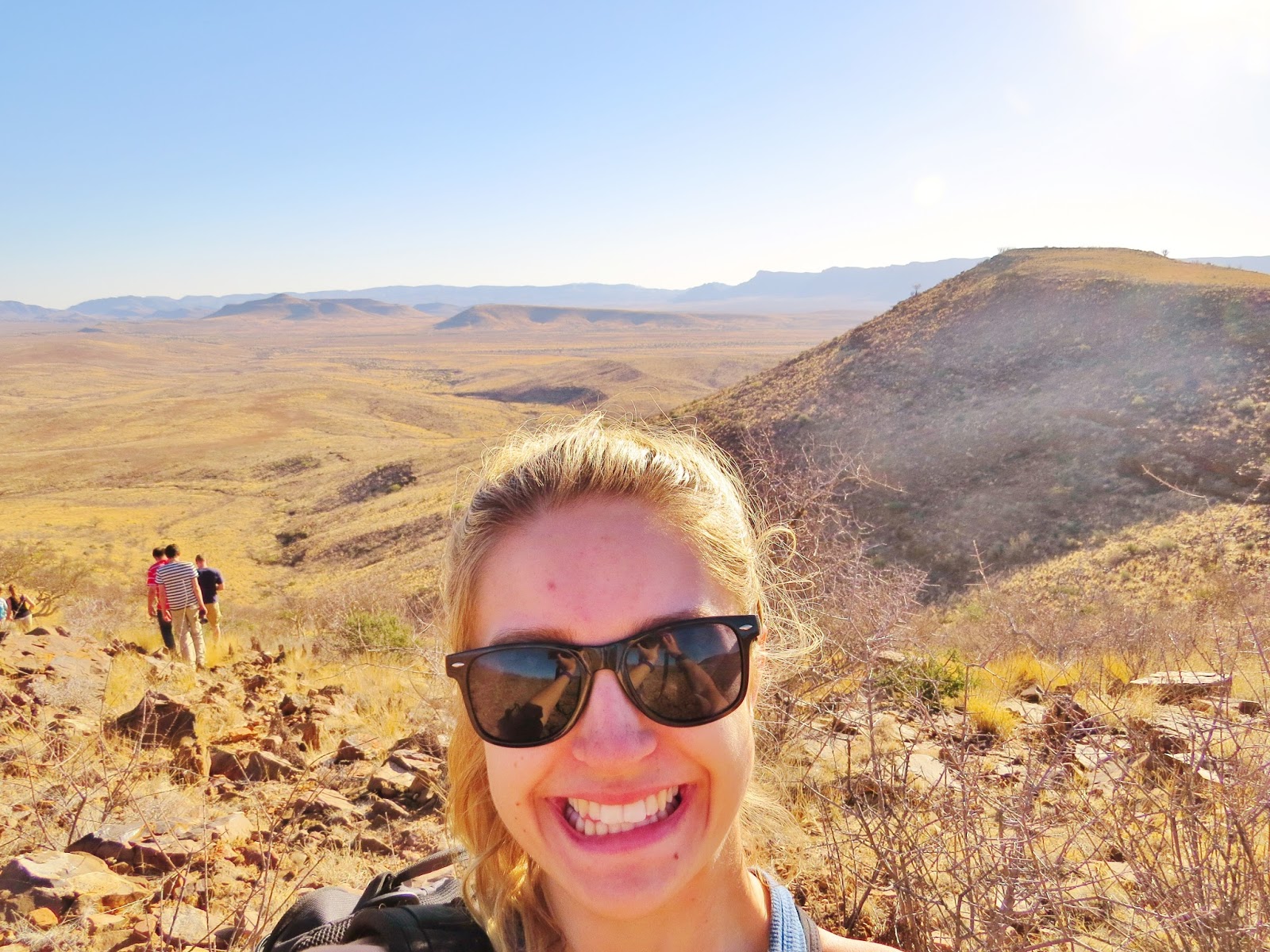
4. Put yourself out there. Last summer when I went to Namibia (and started my blog, doesn't time fly) I took the risk to go out there on my own and it is to date, the best thing I have ever done. Namibia offered me so much experience and was a crash course in showing me many different elements of conservation in Africa. It also helped me to get to know the staff there at the time. Since then, one of the Researchers there, Matt, passed my details on to Paradise Park, who are partnered with the Wildlife Heritage Foundation, and hence, how I found out about them and now have a placement there from April next year. I would have never known anything about theme if I hadn't met the people I did in Africa.

5. Take a risk. Yes, this is referring to my Africa placement that I have just gained, because it certainly is a risk, and I can't wait to take it. I had scoured the internet for hours and hours finding different projects in different countries, trying to find something that fitted and would be in the guidelines of my placement (not allowed to pay the place to go bar living and food) and it felt like every place had many ups but many downs, including some requiring at least 9-12 months which was infeasible for me having already obtained my 2 placements in the UK. It was after lots of searching I came across a website with monkey positions and consequently found my placement. I very nearly didn't even apply as it is part of Durham University so I assumed that they may only take students from there, but I was wrong. Sometimes even if you think its unlikely its worth applying for the hell of it.

6. Gain as much experience as possible! Before Easter a man came in to talk to Biological Science Students about ecological surveying and I was amazed at how many students didn't attend. The talk was by Brooks Ecological and at the end of the talk we were told that if we sent in an email, they would connect us when they needed help with surveys, providing training for us and also experience. This, to me, is a "no brainer", for people who don't know what to do, or even if you do, volunteering one night a week to learn a new technique that may help you in the future is surely one of the most valuable things to do. So far I have attended a Newt Survey which was really interesting and I cannot wait to do another in the upcoming weeks.

7. Stay positive. I know its obvious, but I must have sent over 30 emails out to ecological firms and African wildlife parks last September and I don't think I heard back from any of them! I also had a really good interview but failed to get the job because there were lots of good applicants. Staying positive is often hard but if you don't believe you can obtain the placement, the company certainly aren't going to offer you one.


Lastly, for the biologists and zoologists, here are a list of websites that I used throughout my time of finding placements and some placements that I wish I had applied for...
http://www.environmentjob.co.uk/volunteering
Volunteer Dodo Page( slightly different to environmentjobs.co.uk)
Organutan long term placements
Info on how to gain careers in conservation
For work with Cheetahs
A primate project
TONS of Primate jobs, interships and research assistant opportunities
A blog just for Zoo Jobs
Conservation Jobs & Internships, mainly in America
Volunteer with Marine Life in the UK
Guides to Careers in Animal Behaviour
Jobs and research help in Animal Behaviour


Tuesday, 15 April 2014

The Wildlife Heritage Foundation

My Placement
Recently I have been very busy with the Wildlife Heritage Foundation (WHF). A few weeks ago I went to an interview there about an intern role for 3 months and 2 weeks ago I got the news that I had been successful!!

WHF is a big cat sanctuary in Kent that strives towards being recognised as the best breeding centre for endangered big cats in the world which is a phenomenal mission! My placement will start with them next April which feels like ages away but I expect it to fly round.

My Photography Course
This weekend I visited the WHF again for a photography course that was a Christmas present from my Mum. We arrived onsite at 9.30. The course was taken by John Wright  of Photographers on Safari www.photographersonsafari.com. After an introduction about the best camera settings and a health and safety talk we started our day photographing with the Cheetah. On our way we were shown a piece of sheet steel that was used as an enclosure partition. It was impossible to bend or move but somehow a tiger had bent it beyond repair with puncture and scratch marks all over it. The clear strength of the animal was a reminder to us throughout the day to be careful where we put our fingers.

The whole day was brilliant, we got to get really close to so many big cats! Being 3ft away from a tiger and being so close to such endangered species was an amazing opportunity. I took 100's of pictures during the day and got to learn more about my camera which was a great experience.

WHF have so many cats including Amur Leopards, Amur Tigers, Black Leopards, Clouded Leopards, Fishing Cats, North Chinese Leopards, Snow Leopards, Pumas, Pallas Cats and many more. Getting such an up close and personal experience and the money going towards conservation makes it all the more worth while.

If you are free and in or around Kent, the WHF are having open days where the sanctuary is open to the public between 17th-20th July. It is a rare opportunity to see so many species of big cats in such close quarters and definitely not something to miss out on and tickets are only £10! to learn more about the WHF visit http://www.whf.org.uk/

Here are some of my favourite pictures taken on the day. I spent a lot of my time being in awe of the cats and so narrowing down 300 was definitely tricky.


Tuesday, 30 July 2013

Namibia - Day Thirteen, Fourteen and Fifteen

Solitaire
It took an hour and a half to get to Solitaire from Neuras and it was a beautiful resort with the sweetest dogs around especially the two puppies called Socks and Bear and then a really fat terrier called Jackie who's belly practically drags along the floor! Then there was the huge ridgeback called Butch and a really ugly bull dog called Spike. All of them were crazy too.
For enrichment we had made an elephant and a dinosaur and after placing meat in them we went into the massive enclosure. The two boys called Teddy and Illa met us and they were given the dinosaur. Teddy managed to get his head stuck in a box due to not being the brightest of cats but it did give an incredible comedy moment when he stuck his head up with the box on it. After feeding them we went and found Laura the mother and Rusty her daughter and they were given the elephant. They seemed to struggle to find all the meat but at least they didn't seam to get their heads stuck in the box.
Next we tracked Sparticus then Pepper using the Radio Tracker which was good fun listening to the beeps and learning how they work. After finding and feeding them huge chunks on meat we headed back to Solitaire where we had lunch before heading to the actual town of Solitaire homed to an amazing bakery called Moose McGregors Desert Bakery which apple pie has become famous due to Ewan McGregor talking about how its the best he ever had in his program which he biked through Africa. I do have to say the apple pie is amazing but then so are their chocolate chip muffins as well! Solitaire is such a quaint little town with really just a petrol service station and the bakery but all makes a very quaint and quirky stop when travelling.
After travelling back to Neuras we went for a lovely sun downer and watched the lion king. At 8pm we went on a short night drive where were got to see a very elusive African Wild Cat, Kudu, Jackels, Hares, Zebra and Steembok so was quite successful even if I was falling asleep due to being so tired!

The first group leave Neuras :(
Whilst everyone else was waiting to head back to the animal sancuary Kathryn, Alice and I went with Matt to do some Leopard footprinting. The idea of footprinting started with trying to identify Rhino by their footprints as the collars that they wore seemed to have an effect on their mating success. Since then the company are trying to come up with algarithms for cheetahs and leopards so that each individual cat can be identified by their paw print and for unidentified animals it will let you know  things like whether the animal is male/ female, the weight and the age of the animal as well. When we got near the sight which was where the footprints were we discovered that the leopard that had been in the area was right where we were trying to go and so we had to come back instead. We did get to use the radio signal tracker though which was cool and to here the beep out in the wild does give you a bigger surge of adrenaline than you are expecting! On the way back we spotted a Crested Eagle, I never knew that they were that big until I saw one in the sky. They are enormous!! 
he rest of the morning was spent relaxing and going through Camera trap pictures until the new group arrived.

At lunch we heard some loud grunting noise which was very close. We thought it was just cattle until Kate came over and told us that she thought it was the male leopard that stays close to the farm that they have been trying to collar and it was probably only 50-100m away!!
After lunch we all headed out in search of the leopard that we had been close to in the morning. We tracked her to the top of a hill but by the time we reached the top she had already disappeared into a river bed so we didn't see her which was a shame especially as we were so close in the morning. 
We had a braie again for dinner but I concluded that I prefer Springbok meat to Kudu as its not as tough.

Camera Traps

So on Sunday we did more camera trap work visiting 5 sites. The first 2 we could drive to, one was a water site and another dry. The 3rd was a natural water site which we watched 1.5km to get to. There were signs of leopards there and a tree which Matt things the leopard may use as a hide out. He also explained about Ostrich's getting stuck in the fence and dying from the heat or being killed. The 4th site was a digging site where animals find their own water. On the way we saw really fresh hyena track but they unfortunately didnt go past the camera.
After lunch we went on a game drive but we didnt really see anything var Kudu and Springbok but we did see some ground squirrels which are cute.
The Apple pie


leopard tracking


Hyena Track
Leopard Footprinting

Friday, 12 July 2013

Namibia - Day Three & Four

Induction
Tuesday 11th June was my first real day and it started of by my head being jumped on by 2 baby baboons at 3am due to Koos needing a bottle and wanting to be loud about it so Knoppy woke up too. They then woke up properly at around 6 so luckily I had had enough sleep. After breakfast we had an induction meeting where you are told all about the sanctuary, what animals are there, what they are trying to achieve which somehow lasted for 2 hours and I still don't think I know half of what was said even after being there 3 weeks!
After the induction we helped clean out a warehouse and then had the delightful job of finishing off cleaning the duck pond! Whilst we waited to have lunch we got to play with the merecat and mongooses. After a lovely lunch of chicken burgers and i quick cuddle with a baby baboon we took the mongooses, merecat and warthogs on a walk. Well its more that they go and explore and forage and you get to watch them which is a really nice experience. They are hoping that eventually the warthogs-bacon, choppy and porky, will self release as there are many warthogs present in the park where N/a 'an ku se is. Polo the merecat may end up being like Molly, a merecat that is wild but still lives on the sanctuary. Polo was a survivor when all his brother and sisters were killed. Poor little thing.


Foraging warthogs


Once we returned from the walk we had a talk about Neuras, the place where I spent my remaining 2 weeks  about the work that they do there, the accommodation and things like that. I think experienced my first slightly warm shower. The showers are powered by solar panels and so once the hot water is used up, its gone.

Food Prep
Food prep is the worse job to get done whilst you're at the sanctuary as you have to go through the left over waste food from the bins and separate it out for the animals (very smelly) and then having to mush all the millipat for the baboons but you do get to do some pretty amazing things like go in and feed Samira the 15 year old Cheetah who is 99.9% tame and purs ever so loudly when ever she sees people! Seeing Samira was such an amazing experience as being that close to your favourite animal never feels real, more like you're watching someone else. You can also go in with the 3 cheetah cubs even though they are not tame. Then there is Charlie the orphaned sheep.

After food prep in the morning we took the baby baboons out for a walk before lunch so that they got to play on the tree and then after lunch we took both the baby baboons and the toddlers out to the tree, because the toddlers are bigger and are higher ranking the babies are often a little wary of climbing the tree when many of them are there. Hence the reason they get to go twice. The babies need to learn who the toddlers are though as eventually they will join there group and will be at the bottom of the social ladder. Learning that they are at the bottom from an early age is good for them in social respects too. Once the baboons were all happily back in there enclosure we did evening food prep.


 That evening was the first time i got to go inside with Samira in which there are some strict rules!

  • Never turn your back on a cheetah!
  • Never go below eye level of a cheetah!
  • Never walk away from a cheetah!
  • Never leave the group when in the enclosure with a cheetah.


 In the evening we were given our baby baboon induction where we were showed how to bathe them, change their nappies. I then got given Koos for the night. Harriet and Mowenna were at the watch tower that night too so i spend tea with a baboon in my jacket. I gave him his bottle at 7 and went to bed with him at 8. During the night he was an angel really bar putting his arms and legs in my arm pits. I gave him his bottle in the night at 3am. He then continued to kiss and suck my nose even though he had eaten. He finally got up at 7 and was good until Sheila got in a fight with him. Definitely an amazing experience to have with such cute animals,  well cute when they are little!!